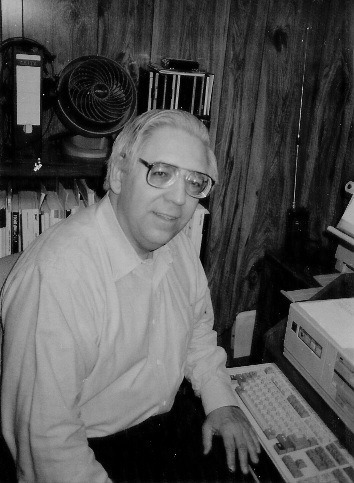


From the recollections of Gabe Bokor
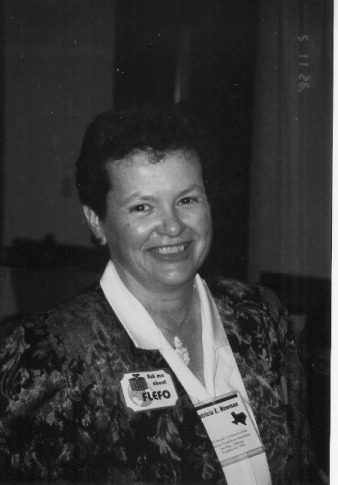
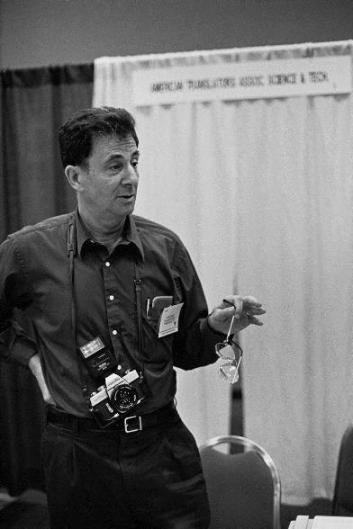
The old S&TD was the brainchild of ATA President Patricia Newman and it was born in her room at the 1982 Arlington, VA Conference. She asked me to be the first Administrator, which I reluctantly (shall I say, foolishly?) accepted. Other early members that I remember included Nicholas Hartmann, Ben Teague (deceased), Bill Grimes (deceased), Dan Lufkin (deceased), Paul Makinen, Jack Segura, Bonnie Carson, and others. Bill Grimes was the first editor of the Sci-Tech Newsletter and wrote most of the articles in the first issues. I think I have all the issues published since November 1985 through the last one of July 1996. I was the desktop publishing (DTP) person from the very first issues, and Bill modemed me the contents for formatting. Both DTP and modem telecommunications were novelties at that time. It’s hard to believe today, but we even had to promote the use of computers by translators.
I took over the editorship of the Sci-Tech Newsletter in 1992 and produced it using high-resolution phototypesetting (rather than laser printing) years before the ATA Chronicle was produced that way. From that year on the Newsletter appeared regularly every quarter and it gradually grew in size and improved in quality. In April 1993 the Newsletter was renamed Sci-Tech Translation Journal to reflect its richer content and more sophisticated appearance. I produced the last issue in April 1995, after which Robert Sette took over, and produced four issues, after which he dropped out. That was basically the end of the Sci-Tech Division.
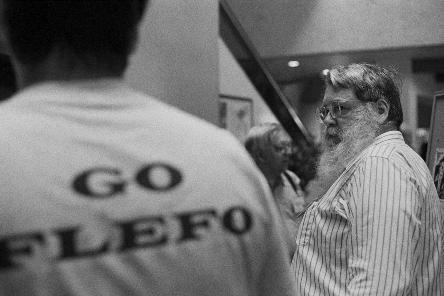
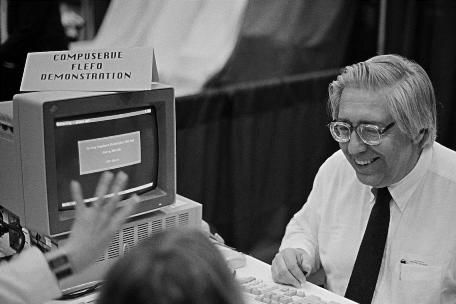
During its first years, the Division was almost undistinguishable from FLEFO (Foreign Language (Education) Forum) of CompuServe, which had basically the same members and the same agenda. We promoted FLEFO at the ATA conferences and demo-ed it when we were able to get a telecom connection.
Update by Nick Hartmann, October 2025
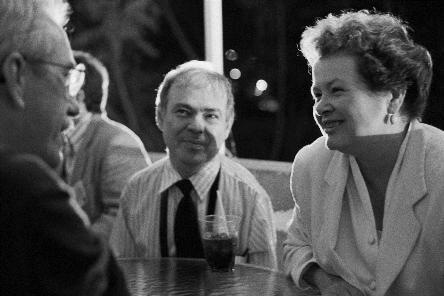
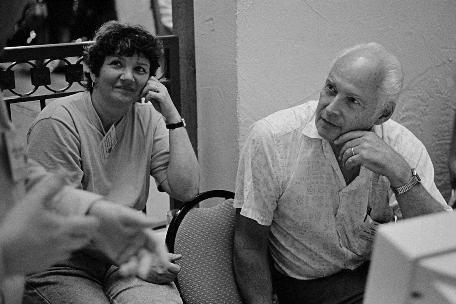
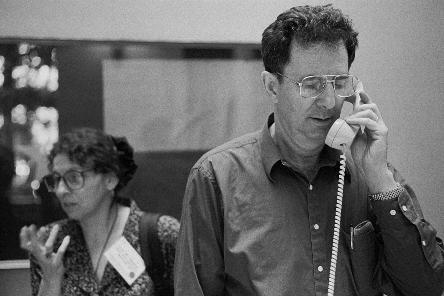
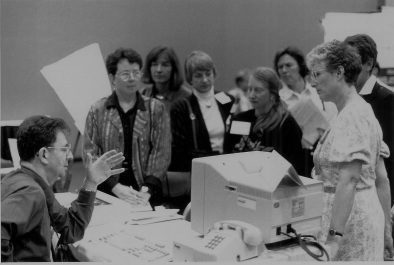
What Gabe neglected to mention was that in the 1980s and early 1990s, not only was FLEFO promoted at ATA annual conferences, but the FLEFOids also gathered on that occasion for an excellent and very well-attended party. Held in someone’s room in the conference hotel, it always featured severe overcrowding (part of the fun), plenty of food and often exotic alcoholic beverages (in flagrant violation of hotel policy but also part of the fun), and a precious opportunity to put faces to the names of colleagues whom one already “knew” but had never actually met.
Update by Matthew Schlecht, October 2025
During the period between the mid-1990s, when the original S&TD lost momentum, and the second decade of the 21st century, many changes had taken place in the language services industry and in the environment within which language service providers operated. CompuServe FLEFO, developed in 1985 as a modem-mediated medium for foreign language educators and enthusiasts to provide electronic mail, a bulletin board, data libraries, and online conferencing, had become moribund by early in the new millennium. Personal computers and computer-aided translation (CAT) tools were exerting an increasing influence on our craft. The World-Wide Web (aka, the internet), as accessed by multimedia “browsers” beginning in 1993, was bringing profound changes to the ways that translators and interpreters did their work.
Scientific and technical translators incorporated these new media and information portals into their daily work, and this gradually diminished the need for regular and intense interactions with fellow translators. Together with these changes, the timelines for translation work shrank as clients became aware that more extensive terminology and context resources were instantly available with a few well-placed keystrokes, and they shortened deadlines accordingly. Translations that were earlier written with pen or pencil on paper were increasingly prepared exclusively in digital formats on personal computers, often employing CAT tools, and delivered by email or via online portals. These changes had the effect of making the environment within which translators and interpreters worked more atomized and isolated, with fewer interpersonal interactions. The erstwhile print version of Gabe Bokor’s Sci-Tech Translation Journal transitioned to a web-based version, the Translation Journal, for which issues are still available for the timespan 1997‒2013.
In addition to the online networking capabilities offered by ATA, new independent online communities had been developed, such as the Sweden-based LANTRA (LANguageTRAnslation) mailing list and later Rosetta, where terminology inquiries could be posted and addressed, questions about computers and CAT tools could be posed, community members could discuss the myriad aspects of the rapidly changing business practices environment, or just chat. ATA had developed an internet-based language services directory, which could facilitate connections between clients and vendors, and many independent databases arose to serve similar purposes, such as ProZ, TranslatorsCafé, TRADUguide, and the now defunct Aquarius. ATA had developed an online Membership Directory, as well as a presence in social media such as LinkedIn (2003), Facebook (2006), and Twitter (2006, later X in 2023), which allowed translators and interpreters (and their clients) to contact each other, share information and advice, or just chat.
Amidst these vast technological innovations, translators and interpreters working in the science and technology fields felt the need for a new home base within ATA. In early 2010, Karen Tkaczyk, Stephanie Strobel, and (the late) Steven Marzuola began discussions about reinvigorating the Division. They felt that although the extant language divisions provided support and camaraderie, there weren’t enough scientists in most of those divisions to allow meaningful peer-to-peer conversations on the aspects of technical translation. Looking for a suitable home within ATA, they learned about the previously active Science & Technology Division, and with the strong support of Nicholas Hartmann, who was by then ATA President, decided to relaunch it.
It was recognized that a large number of specialized technical translators would benefit from the opportunities for networking, terminology research, and professional development opportunities offered by a division specifically focused on science and technology. In addition, since the styles and conventions required in technical subject matter are specific and well-defined, having a dedicated Science and Technology Division would provide a forum to improve scientific and technical writing skills within ATA. The Divisional by-laws were updated in February, 2010, and an official proposal for the relaunch was developed in April 2010, with the goal of re-establishing a division to provide a community for translators of texts relating to science and technology. The mechanism involved an individual petition, prepared in March 2010, which concerned members could use to express their support and intention to join the new division.
The proposal was accepted, and the S&TD was launched in 2010 with Karen Tkaczyk as the Administrator and Steven Marzuola as Assistant Administrator. The first annual meeting of the new division was held on October 29, 2010, during ATA’s 51st annual conference in Denver, at which plans were made to develop a website to include blog articles and news items, as well as notices of events, information about membership, and resources for technical translators. An email list for the Division was established, initially on YahooGroups. The renewed Division was established too late in 2010 for a Division Distinguished Speaker to be invited or for a strong slate of S&TD sessions to be scheduled, but planning was initiated for the following year’s conference in Boston.
In terms of the relevant content areas, a decision was made that although there were some areas of overlap, the S&TD would not duplicate areas and topics that were central to the Medical Division (e.g., clinical texts or patient information leaflets) and the Language Technology Division (e.g., machine translation and translation tools per se).
As of 2011 there were 1300 ATA members who had affiliated with the new Division, and a Leadership Council was formed on a temporary basis in February of that year. Members of this council had individual responsibilities for the Division’s activities: a blog, Facebook page, Twitter feed, online forum and email list, and developing the website. The Leadership Council were also tasked with suggesting Distinguished Speakers, investigating possible field trips during the annual conference, and investigating possible venues for a Division dinner during the conference. In June of that year, a survey was distributed to solicit feedback on how the S&TD could better serve its members. The 2011 annual conference (ATA52 in Boston) hosted eleven presentations with a science & technology affiliation. A new Twitter account was used to tweet out updates during the meeting
In 2012, monthly reports on Division affairs were included in the “News” section of the website, and conference materials from that year’s annual conference (ATA53 in San Diego) and each year since were made available there. A LinkedIn group for the Division was created and curated by a member of the Leadership Council. Members were encouraged to prepare and present webinars on science and technology topics of interest.
The membership and activities of the Division continued to grow through the 2010s, with enhancements to the Division’s presence on various social media, and developing strong line-ups of presentations and interesting Distinguished Speakers. In 2019 the S&TD email list migrated from YahooGroups to Groups.IO.
However, the COVID pandemic in the year 2020 brought substantial changes to the country (and the world) in general, and specifically to the translation and interpreting industries and individual practices. The 2020 ATA annual conference, initially scheduled to take place in Boston, was reconfigured as a virtual conference. The S&TD annual business meetings, which had initially been held during the in-person annual conference, likewise migrated to a virtual format and was held during the virtual conference. The advantages of the virtual format, especially for convenience and the inclusion of more members led to this change of venue becoming permanent, and the timing was shifted to the month before the ATA annual conference. Beyond the annual Division meeting, additional virtual events such as networking and brainstorming meetings are hosted by S&TD throughout the year.
Although the growth and impact of machine translation (MT) on the translation industry had been on the rise for a number of years, the year 2020 coincided with an acceleration of the impact of MT and post-edited machine translation (MT/PE). Many established translators found their traditional workflow shrink or essentially vanish, and were compelled to either accommodate to this paradigm shift, transition to different careers, or retire. Many presentations at the ATA annual conferences, both from the S&TD and other divisions, have addressed this sea change and offered suggestions on how professional language services providers can adapt and move forward.
Another S&TD membership survey was conducted in early 2022, and questions covered the usefulness of the various social media (website, email list, Facebook page, LinkedIn page, Twitter) and requested suggestions as to how the Division might better serve its members. The results of this survey were presented and discussed at the 2022 Division meeting. One initiative was to develop a podcast series, and a team was formed to explore and implement this. Eventually, six podcasts were prepared and made available (and are still accessible on the S&TD website), but the time and effort necessary to prepare these presentations coupled with a relatively low viewership led to this initiative being discontinued in 2024. In addition, it was discussed and decided that having a continuing presence on the X social medium likely did not provide a benefit to the Division commensurate with the effort necessary to manage it.
During ATA63 in Los Angeles in 2023, the S&TD began an experiment with student poster presentations. This was envisioned as a venue to provide student members an opportunity to present research results in a novel one-on-one or small group format, and as an encouragement to persons training for and considering a career in the language services industry. We had one such student presentation at ATA63 in Los Angeles, and after skipping a year we arranged for three student presentations at ATA65 in Portland.
As of late 2025, the S&TD is the fifth largest of 26 ATA divisions, and has 1,083 total members: 1,077 individual members and six corporate members. This represents an approximately 10% decrease since 2024, which is consistent with the drop in membership generally experienced within ATA and follows a trend of decrease over the past five years. In the face of the substantial challenges in the profession, our Division is dedicated to continuing to provide support, resources, and camaraderie to the translators and interpreters working on scientific and technical content.
Photos from the Archives
Click on a photo to enlarge and for the caption (Photos courtesy of Nick Hartmann)